How I Use AI in My Work — and Where I Don't
Where AI earns a place in my process, and where the human element stays mandatory
I started out skeptical
I was fairly reluctant about AI in the beginning. I wasn't sure how it would help or what it would actually give me that I didn't already have.
But I've approached every new tool in my career the same way: get my hands on it, try it, and figure out what's useful and what isn't. So that's what I did. I experimented, and I paid attention to where it earned a place in my work and where it didn't.
The first clear win: Otto
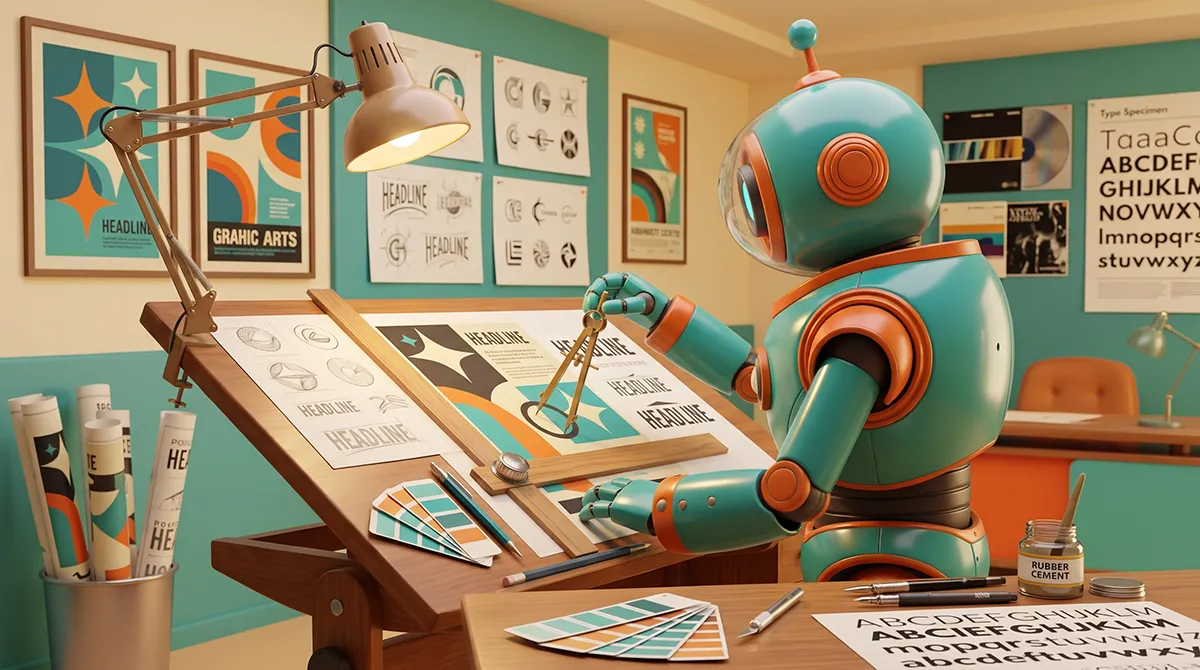
The first place AI clearly made sense was Otto, the Chief Lab Assistant, and the images of him you'll see around the lab and across this site.
I couldn't justify setting up photo shoots for every one of those scenes, and honestly, they didn't need one. Those images are there for graphic relief and a little fun. They support the message; they don't carry it. Using AI there didn't bother me at all.
That became my first rule of thumb: use AI where the stakes are low and the payoff is real.
Moving into the real work
From there, I started asking a harder question. Where does AI fit into my actual process? What work is tedious for me? What can it do faster than I can, in more detail, or sometimes better?
The turning point was the Figma MCP. It let me direct AI agents to work inside Figma the way I work in Figma. Suddenly I could hand off the creation of design tokens, variables, and even some components.
I also started handing off lighter design work, the kind of internal-use pieces I would once have given to a junior designer. It has done a good job keeping that work on brand, and it takes busywork that used to cost me hours and finishes it in minutes.
That extended to the early stages of creative work too: building creative briefs, putting together light mood boards, and exploring color.
It carried over into my consulting work as well. I gather a lot of information from many sources, and AI helps me pull it all into one place. One result is a workbook clients use to build their brand and personas. It's a tool they can share and come back to again and again, not a one-time deliverable.
Teaching AI my method
This is the part that changed everything. I didn't just start using AI. I taught it my method.
I started with design systems. I took the way I build them (color palettes, spacing, sizing, radius, typography, and button tokens) and wrote it down as instructions an agent can follow. Now, when I start a new system, I'm not explaining things from scratch or repeating the same setup work. The agent already knows how I work.
Then I went further. I codified my brand discovery process: the questions I ask, the order I ask them in, and what I'm listening for. Every client now gets their own reference file with their voice, their stakeholders, their positioning, and the decisions we've already made. When I open a project, the context is already there. I don't have to rebuild it from memory or dig through old notes.
The result is a system that's repeatable, consistent, and built around how I think. AI handles the execution. The method is still mine.
The test: building something real
Reading about what AI can do only goes so far. I needed to watch it handle real work, so I gave it a real project: a portfolio site. It was never meant to go live. It was a test bed to learn what AI could do better than I could.
I designed the site in Figma: the layout, type, color, components, and every decision behind them. Then I handed the build to Claude, which executed it in Webflow. After that, we rebuilt the same design in WordPress.
One design, two platforms, and both builds stayed true to what I designed. The experiment showed me what this way of working looks like in practice. I direct the work, and AI does the hands-on build. The design thinking stays mine.
Where I draw the line
So where do I draw the line?
Honestly, the line keeps moving. AI is the worst today that it will ever be. It only gets smarter and better at the work I do, and I don't pretend otherwise.
But building a brand still needs a human: understanding the people behind it, finding the story worth telling, and making the calls no checklist would make. Where the human element is mandatory, I stay involved. Where the work is repeatable, where it's filling in a structure I've already built, I let AI handle it.
That's the arrangement. I bring the thinking. AI brings the speed. My clients get both.

Sean Walker, Founder | The Architect
Sean Walker is a Creative Director and Brand Strategist who helps small to mid-sized businesses clarify their message, align their digital presence, and turn attention into qualified growth.
The Wrong Question Is Killing Your Redesign Before It Starts
Most website redesigns fail because they're built on internal opinion, not user behavior. The fix isn't better design — it's a better diagnosis.
When a website redesign starts with "I don't like the way this looks anymore," the most important voice in the room is already missing — the user's. Your current site holds a record of what people are actually trying to do. Ignoring that data to start from scratch isn't strategy. It's a guess with a big budget. A better redesign starts with a diagnostic: understand the system that exists before you replace it.

Is your website designed to convert?
The simple answer is, "Probably not." Too many businesses use their website as a brochure, telling the world how wonderful they are and what incredible services they provide.
Design is important to the success of your communication efforts, but it may not be what you think. Often, design is confused with aesthetic. Both are important, but they serve different functions. Design is the structure. Think of it as the floor plan to your new house. While aesthetics is the paint colors and furniture. The design guides your visitors through the journey to becoming a customer. The aesthetic creates the emotional connection to your company.
Your Brand Has a Lot to Say. Does it Have a Place to Say It?
People visit, but don’t act. You explain what you do, but it doesn’t land.
You know something is off, but you can’t pinpoint it.
That’s what we fix.
You’ll get a direct breakdown of where your message is unclear, where your site slows people down, and what to fix first.